Study
Here I share notes and deep dives on the technical topics that have fascinated me the most (both at university and beyond).
Master's

Creative programming
Summary of CPAC topics: an interesting introduction to the use of AI and generative algorithms in the artistic field.
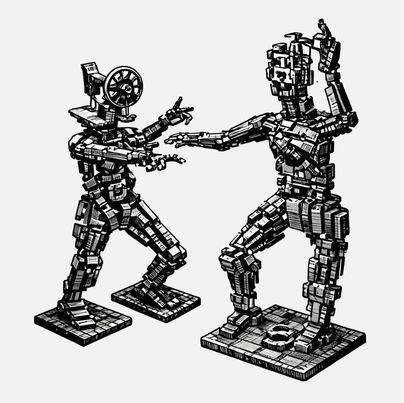
Fundamentals of electronics
Fundamentals of electronics, with a brief overview of applications for mixers and effects. Preparatory section for the electroacoustics module.

Fundamentals of electroacoustics
Brief summary of electroacoustics basics, with descriptions of electro-mechano-acoustic models and their respective applications (it).

Signal analysis mod1
This work collects and organizes the main theoretical and applied tools for the analysis, modeling, and manipulation of audio signals.

Signal analysis mod2
This is the continuation of Module 1. This time I took notes in the form of a study journal: it was fun, but don't try this at home.
Computer music r&m
Sound is not just physics but also experience: the relationship between source, environment, and receiver is influenced by physiological limits, neural and perceptual interpretations.

Fundamentals of acoustics
Collection of course proofs. I wouldn't use it to study the subject from scratch, but it's great for reviewing the proofs organized by topic.

Multimedia Signal Processing
Collection of the main contents from the MSP2 course at Politecnico di Milano, aimed at providing a practical guide for study and exam preparation.

Toolbox for studying DSP
A small “toolbox” for studying DSP: not a complete course, but an ordered collection of concepts that helped me not lose the thread when theory gets dense.

Convolution
Convolution describes how a system (room, filter, hardware) transforms a signal by combining present and past samples through its impulse response.
Real-time convolution
FFT-based convolution is already fast, but in real time the real issue is latency: you cannot wait to have the whole signal, you must produce output while samples arrive.
Computing infrastructures
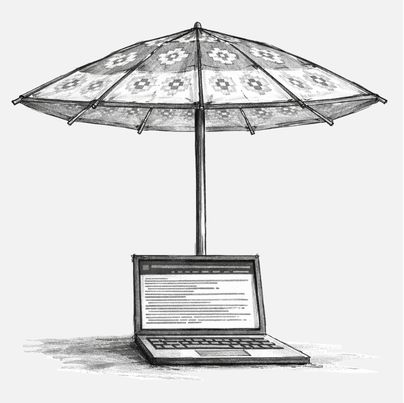
This page contains a (not so) brief reworking of the Computing Infrastructures lectures I attended at Politecnico di Milano.
Bachelor's
Fundamentals of economics
Summary of economics lectures. It might seem unrelated to the main field of study, but it actually turned out to be a very useful course (it).

Fundamentals of informative systems
Like the Economics one, this was an unexpectedly interesting and useful course. The article only contains a brief summary, to be used for review (it).

Physics
This document concisely compiles definitions, formulas, and key proofs for Physics 1, aiming to provide a quick yet complete reference for review and exercises (it).