Spettri
It is 2020. The world is panicking because of the Covid pandemic, you are immersed in the family tensions that naturally arise among 4 people trapped for months in the same brick cube, and you are trying to survive Analysis 2.
All of a sudden, a strange bearded guy contacts you asking you to play in a “music project”.
You like the idea, but there is a problem: venues no longer let bands play because they already have to waste half of the available space to keep the distancing required by law. With revenue drastically reduced, they cannot afford to pay 5 people and dedicate a large area to them. For this reason, DJs had become the only option.
You decide to try anyway. The solution? Make one musician play 3 instruments: you.
While you practice, you contact a guitarist you knew from the past, who you remember as really good, proposing that he join. The project is ill-defined and barely feasible, but the deterministic succession of life events leads him, for some reason, to accept.
Spettri have just been born.
THE ENGINEERING SIDE OF LIVE SHOWS
I get it, you are tired of me writing in the second person and you would like to know how we actually implemented what I described above. Gioachino (the guitarist) had his own magical set of pedals and pedalboards, about which I know little, but I can explain my setup.
The objects I had available are:
- a Nord Stage 2 Ex;
- 3 pedals: sustain, control, organ;
- an MPK Mini mkII;
- a PC with FL Studio (not technically the best software for my purpose, but the one I was most familiar with).
The idea is to make the most of both hands using dynamic keyboard splits and volume or effect controls via the control pedal.

I will explain the details in the next paragraphs but, to give an idea of the result, the effect is similar to what I later implemented in a single .js module for Arturia MiniLab.
Let’s start from the bottom
Since bassists usually play one note at a time, I treated this instrument as if it were monophonic. This automatically generated several possibilities:
- The temporal bass: imagine assigning two overlapping instruments to the keyboard: a strings VST (polyphonic) and a monophonic bass. Now imagine playing a chord: what will the resulting effect be? The chord will be played by the strings, while the bass will play only the note you pressed last. If you can generate a tiny delay on the chord note you want the bass to reproduce (and it is usually the tonic), you can use a single hand to play a pad or synth and a bass.
- Split and sustain: now we split the keyboard into two parts, reserving the right split for strings, while on the left we overlap those strings with the bass. Let’s also consider the sustain pedal: we assign it to the bass, while the strings are not affected by it. If we now play using the “temporal bass”, what happens is that, by using sustain appropriately, we can “freeze” the bass at every chord change. In songs where that instrument is very static, this approach allows us to freely play on the right side of the keyboard while still keeping the bass.
More possibilities thanks to the control pedal
If, on top of all this, we add a control pedal mapped to some parameter, the possibilities multiply: we can create configurations in which instruments enter and exit the sound scene with transitions based on many different parameters, combining different effects and obtaining extremely high control capability.
And the drums?
All the steps above served me for one main reason: being able to manage bass, keyboard, and synths with the right hand only; the left hand would be reserved for drums, a fundamental element of every band. There is not much to explain here, I simply had to improve the independence of my hands, so I could manage two very different things at the same time.
Everything live, no sequences
It was difficult to configure at first, but this setup allowed us to play live literally anywhere, even in a small hotel room (as shown in this video).
BPM AND SANREMO ROCK
Live shows were certainly an important part of our project, the way to escape the top-down lockdown, but we also wanted to create something of our own. That is how Dario, Gioachino and I started locking ourselves in a room for entire days to play, improvise, exchange ideas and record. Goal: compose something meaningful.
The final result is BPM, our first single, published through the label Circuiti Sonori by Armando Cacciato.
We liked the track so much that we signed up for Sanremo Rock. The selection process of the contest was divided into the following steps: provincial selections; regional selections; national final.
We immediately passed the first phase and went to Marsala for the regional selections. After a long evening full of very solid bands, the 8 finalists were announced: we were among them.
It was incredible for a project born out of nowhere, with no ambition, less than a year earlier. We appeared in Sicilian newspapers (Giornale Di Sicilia, Primapagina Trapani, Grandangolo Agrigento, CanicattìWeb, Primapagina Castelvetrano, …), as well as on the official Sanremo Rock page.
So it was time to set sail for Sanremo, for real: we took the ship Palermo -> Genoa, and from there we headed (with difficulty, given the equipment) to Ventimiglia, where dear friends hosted us.
The finals took place over multiple days, during which we met fantastic people and played on the legendary stage of the Ariston Theatre (it is much smaller than it looks on TV. Everyone says it, but it is actually true).

Result: we won the Mamely award, we did not win the contest, and we had a lot of fun.
Back in our hometown, during an event, the mayor wanted to award us a plaque of merit. It was unexpected, but we were honored.
KARDIA
In creative individuals, satisfaction is only the time between completing the previous work and conceiving the next one. For this reason, we immediately started working on a new album, released in 2022. You can listen to an excerpt here.
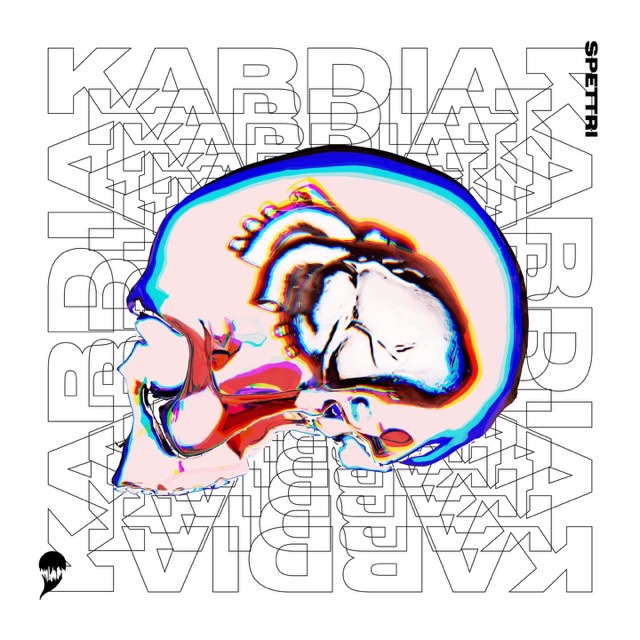
After Kardia, we took a break due to the needs of each of us.
As for me, I had neglected university a bit during my bachelor’s, graduating with a not-excellent grade. Being a perfectionist, I was not satisfied. I set myself a new goal: 110 cum laude for the master’s at the Politecnico. At the moment I am writing this article I still do not know whether I will reach the target, but I have finished all exams with an average of 28.7 and 5 honors. Everything will depend on the grade the professors will assign to my thesis, but I am confident.
In any case, Spettri will come back. Sooner or later.